

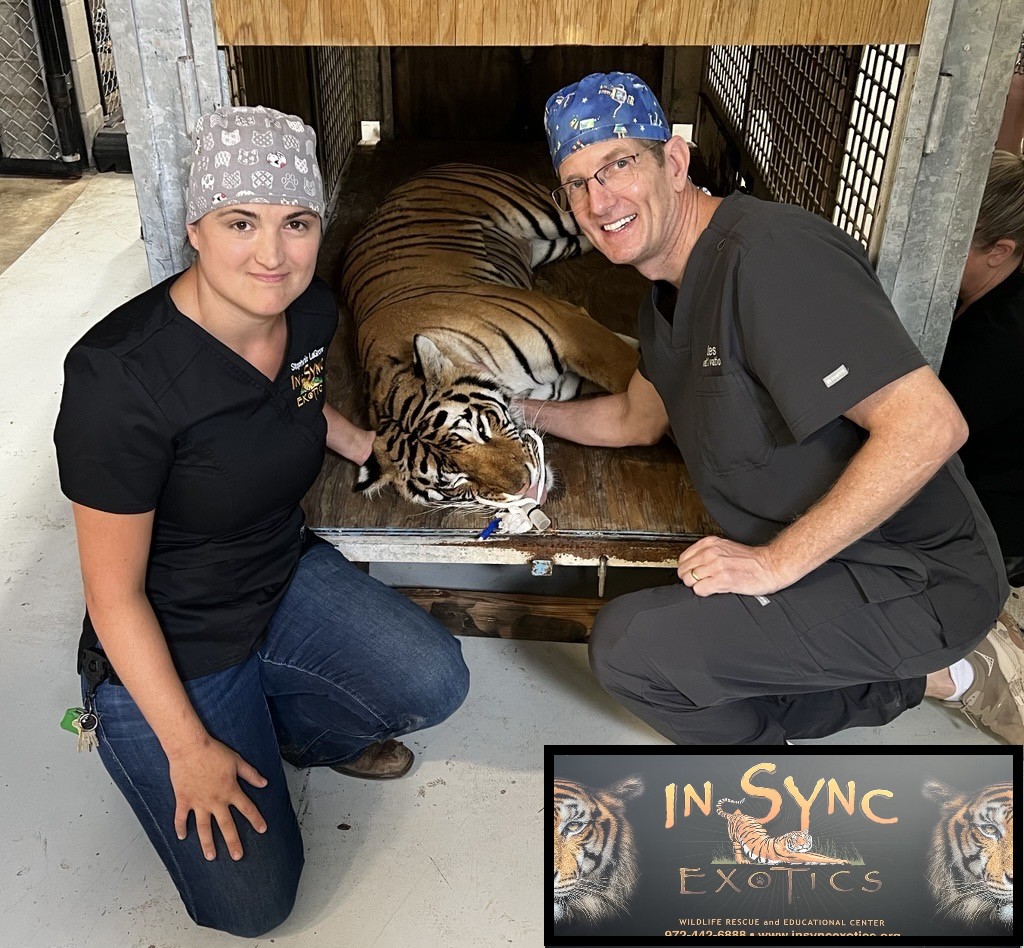
In a quiet operating room at In-Sync Exotics Wildlife Rescue, a 250-pound Bengal tiger named Minnie lies under anesthesia. Dr. Stephanie LaGrone and the surgical team move with calm precision, not with outdated suture kits and bulky clamps, but with sleek, minimally invasive equipment that allows them to seal tissue, minimize blood loss, and reduce trauma in a matter of seconds.
This isn’t a documentary. It’s real surgery, on a real animal, using tools that are available to general practice veterinarians across the country.
🎥 Watch the behind-the-scenes footage
What Is Minimally Invasive Surgery in Veterinary Medicine?
Minimally invasive surgery (MIS) uses laparoscopic and endoscopic equipment to perform procedures through small incisions. Compared to traditional open surgery, MIS reduces tissue trauma, shortens anesthesia times, and improves patient recovery.
Learn more in our guide: Why Minimally Invasive Surgery Is the Future of Veterinary Medicine
Inside the Tiger Surgery: Tools That Made It Possible
In this case, Minnie required a procedure that, using traditional open surgery, would’ve meant a large incision, prolonged anesthesia, and a long, high-risk recovery. Instead, Dr. LaGrone uses:
- VetOvation’s Voyant Vessel Sealer to quickly clamp, seal, and transect tissue in one motion without tying off vessels manually
- A Laparoscopic surgical system to access the abdomen through small incisions, dramatically reducing surgical trauma
- Endoscopic visualization to guide the entire procedure with crystal-clear internal views without opening the body cavity
Throughout the video, you’ll see how this approach allows the surgeon and her team to maintain a sterile field, keep the patient under anesthesia for less time, and ensure a smoother recovery—something that’s especially critical in exotic animal medicine where stress and post-op care are hard to manage.
Why Minimally Invasive Surgery Matters for General Practice Vets
Now, you may not be operating on tigers, but here’s the takeaway:
If this level of precision and efficiency is possible for a 250-pound Bengal tiger, imagine what it can do for your canine and feline patients.
The benefits for exotic animal surgery, like limited time under anesthesia, minimal tissue handling and lower tolerance for pain are also present for small animal practices. The difference is, most general practice veterinarians were not taught how to perform laparoscopic or minimally invasive procedures in veterinary school.
At VetOvation, we hear it all the time:
- “I didn’t learn this in school.”
- “I didn’t know these tools were available to me.”
- “I can’t afford expensive equipment like a laparoscopic system.”
- “I thought this was only for specialty clinics.”
This blog, and this video, exist to show that’s no longer true.
Educational Breakdown: What Tools Were Used in the Tiger Procedure?
Here’s a closer look at what Dr. Stephanie LaGrone used in the OR and how you could be using it too:
Voyant Vessel Sealer
The star of the show. This handpiece enables fast, reliable ligation—no clips, no ties, just a clean seal that reduces blood loss and anesthesia time. In the video, you’ll see it used on vascular tissue in real-time, with near-instant results. In general practice, this tool is perfect for spays, splenectomies, mass removals, amputations, and more.
Laparoscopic Camera + Port Access
The surgery is performed through two small ports, with a camera inserted to provide a live feed from inside the body. You’ll see Dr. LaGrone navigate with confidence thanks to the crisp, magnified view. For general practice vets, this means clearer decisions, cleaner procedures, and less risk.
Surgical Efficiency
From instrument placement to seal-and-cut speed, every movement is streamlined. She doesn’t need to reposition or use multiple tools to isolate and tie off vessels, one device handles it all.
The exact same system that VetOvation provides for In-Sync Exotics, they also provide to practices of every size. What makes the system powerful is not just the technology, but how accessible and easy it is for the surgeon to use.
Why Pet Owners Expect Minimally Invasive Surgery
Pet owners are no longer just hoping for fast recoveries and smaller scars—they’re expecting them. Offering advanced surgical options isn’t just about better medicine; it’s a competitive advantage.
Benefits for your clinic include:
- 🐾 Faster patient recovery = fewer complications, more satisfied clients
- 💼 Shorter anesthesia time = more efficient use of OR and staff
- 🧠 Modern capabilities = positioning your practice as forward-thinking
- 💰 Increased revenue = attract clients willing to pay more for advanced care
And the learning curve? Easier than you think. We provide guided onboarding, in-person training, and consultative support so you can start performing minimally invasive procedures confidently and quickly.
How to Start Incorporating MIS in Your Practice
Most veterinarians weren’t taught MIS techniques in school — but with the right support, you can start small and build confidence quickly.
Begin to introduce Minimally Invasive Surgery at your clinic by:
- Identify 1–2 procedures that could benefit most from MIS
- Learn the basics of laparoscopic and endoscopic surgery
- Explore training, product demos, and support resources
VetOvation is on a mission to bring advanced, minimally invasive surgery into everyday practice by making it understandable, affordable, and implementable.
We offer:
- In-clinic training that will leave the staff immediately ready to start these procedures.
- Free educational guides
- Step-by-step video training
- Product demos + in-clinic support
- 1:1 calls to map out exactly what you would need to get started
Want to See the Full Surgical Setup?
🎥 Watch the tiger surgery video her
Explore the tools used:
Final Thought: It’s Not Just About the Tiger
Yes, this video is impressive. It’s rare, dramatic, and emotionally compelling.
But it’s not just a story about a wild animal. It’s a glimpse into what your practice could be doing every day. More efficient procedures. Less patient trauma. Better outcomes. And most importantly, the confidence to handle any case with tools that deliver real results.
Whether you’re treating tigers or tabbies, VetOvation has your back.
Schedule a consult with our team
Bonus Resource: The General Practice Vet’s Guide to Minimally Invasive Surgery