

Explore
Vessel Sealing
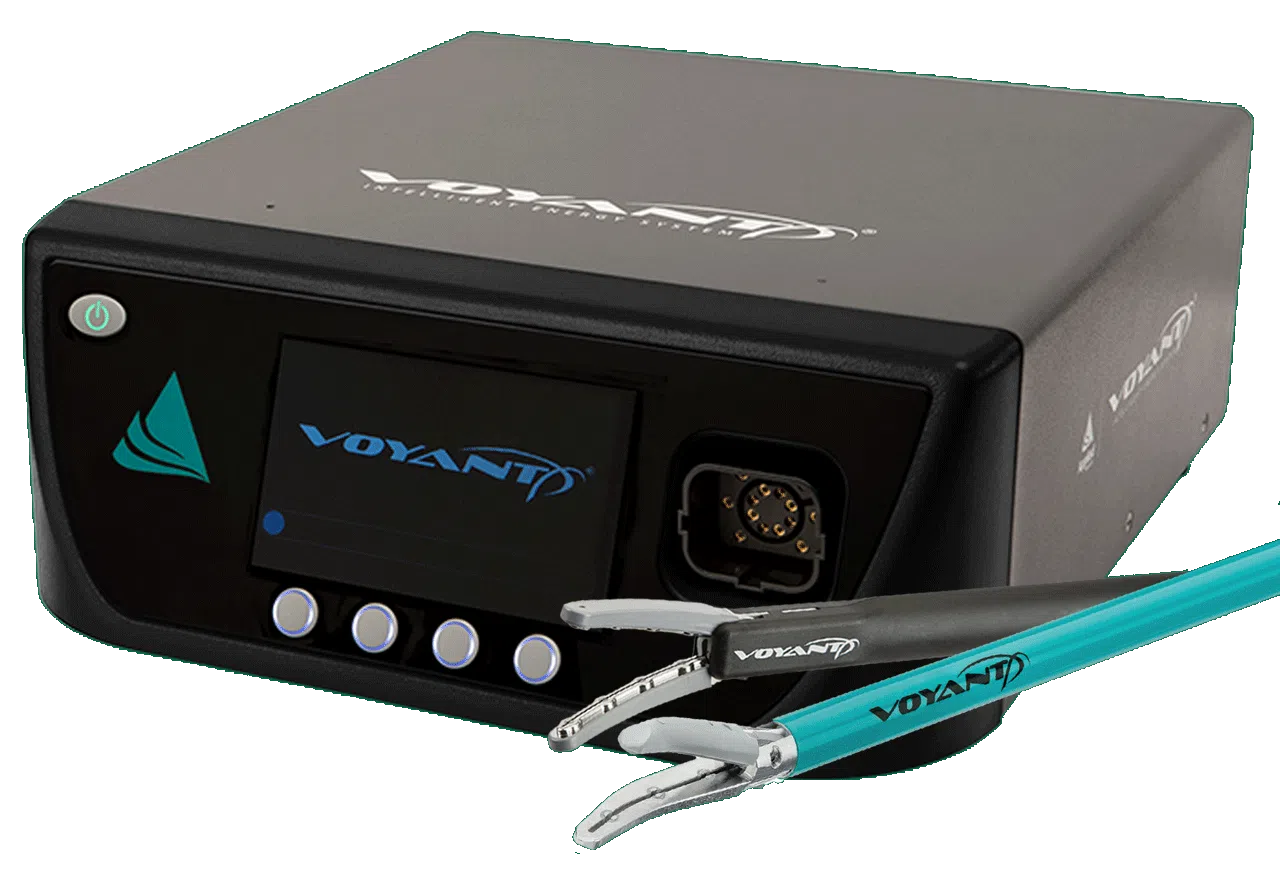
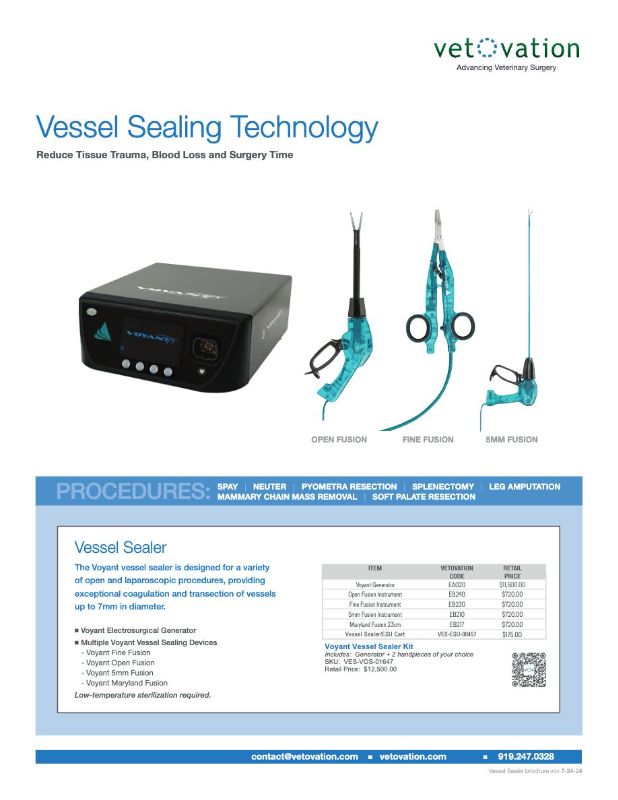
Vessel Sealing technology enables a variety of open and laparoscopic procedures. The many benefits include: decreased blood loss, reduced tissue trauma, shorter anesthesia time and less procedure stress for the doctor and staff.
Vessel sealing has become a standard of care in veterinary surgery because it replaces multiple steps of traditional suture ligation with a single, controlled seal-and-cut action. Most systems pair the sealing action with an integrated cutting blade, so the surgeon can seal and divide tissue in one motion instead of clamping, tying, and cutting as three separate steps.
Designed for veterinary procedures including:
- Spay / Neuter
- Splenectomy
- Limb Amputation
- Pyometra Resection
- Mammary Chain Mass Removal
- Soft Palate Resection
Shop Vessel Sealing Products
Other Categories
-
$725.00 – $4,000.00Price range: $725.00 through $4,000.00Select options This product has multiple variants. The options may be chosen on the product page
-
Sale!$725.00 – $4,000.00Price range: $725.00 through $4,000.00Select options This product has multiple variants. The options may be chosen on the product page
-
$725.00 – $4,000.00Price range: $725.00 through $4,000.00Select options This product has multiple variants. The options may be chosen on the product page
-
$725.00 – $4,000.00Price range: $725.00 through $4,000.00Select options This product has multiple variants. The options may be chosen on the product page
-
$750.00 – $770.00Price range: $750.00 through $770.00Select options This product has multiple variants. The options may be chosen on the product page
-
$1,550.00Select options This product has multiple variants. The options may be chosen on the product page
For veterinary surgeries, including spays, which of your vessel sealers is best?
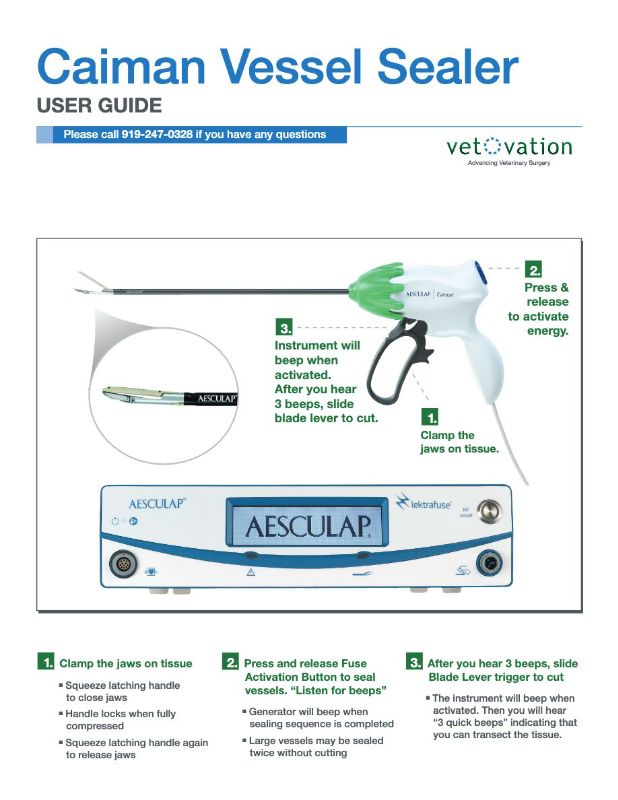
VetOvation offers two energy-based vessel sealing systems suited to spay and neuter procedures: the Voyant system by Applied Medical and the Caiman system by Aesculap. Both reduce blood loss, tissue trauma, anesthesia time, and procedure stress compared with traditional suture ligation.
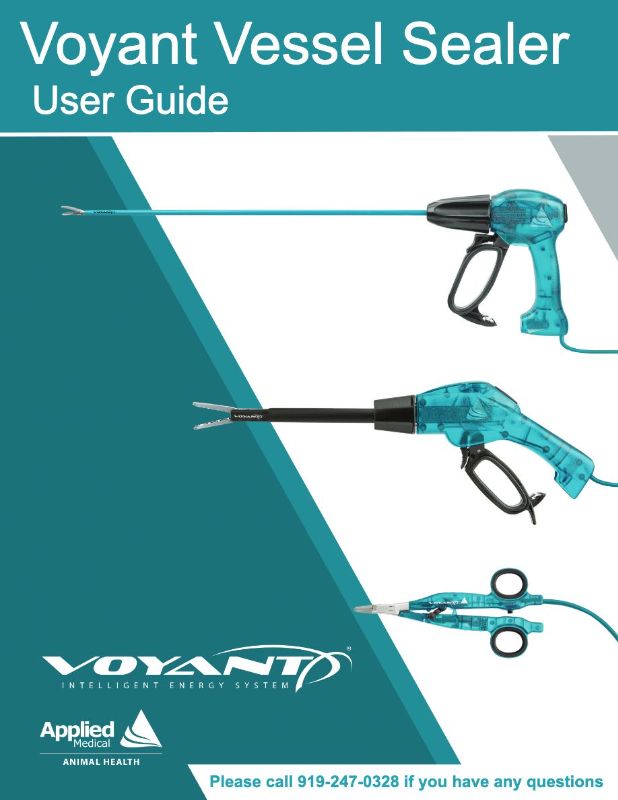
For open spay, the Voyant Open Fusion Instrument is built for open surgical approaches and runs on the Voyant Electrosurgical Generator. For laparoscopic spay, the Voyant Maryland Fusion or the Caiman 5 mm Vessel Sealing Laparoscopic Instrument are designed for minimally invasive procedures. The Caiman 5mm Instrument pairs with the Caiman Vessel Sealing Generator.
Practices new to vessel sealing can start with the Voyant Vessel Sealer Starter Kit, available as a new unit or a serviced unit, which bundles the generator and instrumentation in one package.
Beyond spay, VetOvation’s vessel sealing instruments also support splenectomy, limb amputation, pyometra resection, mammary chain mass removal, and soft palate resection.
Testimonials
Product Brochures


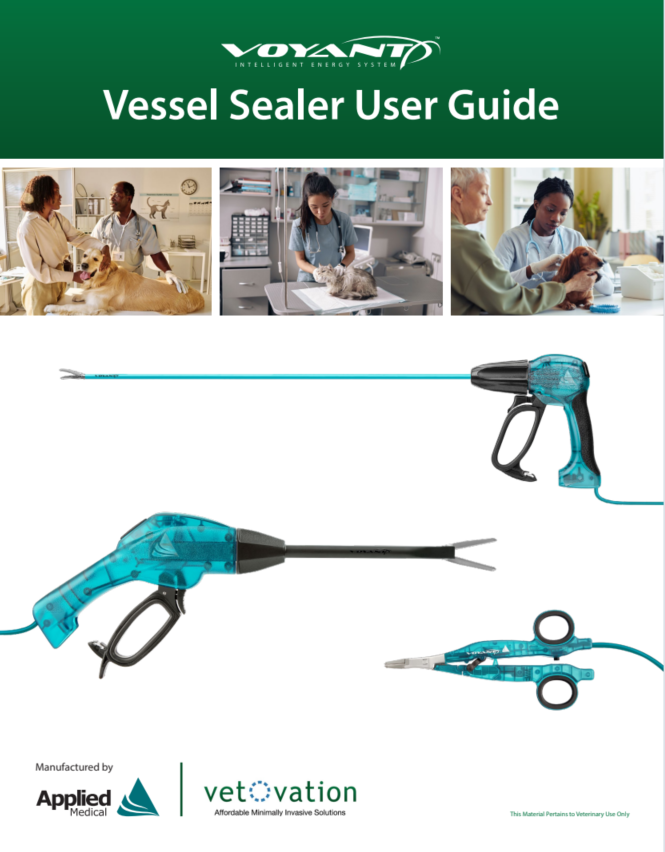
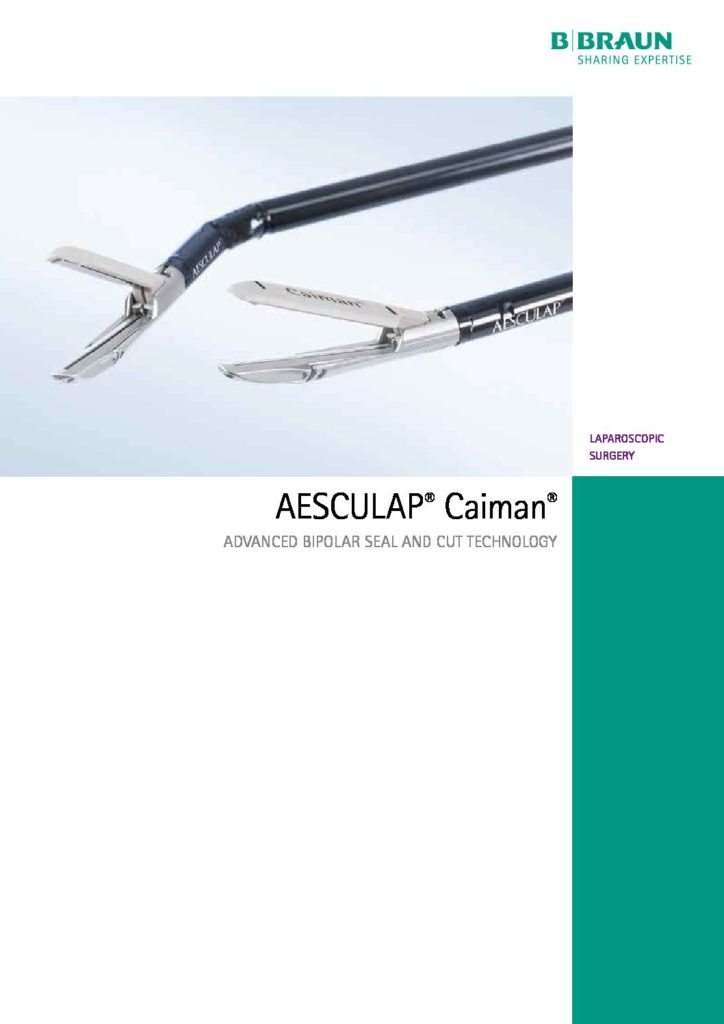


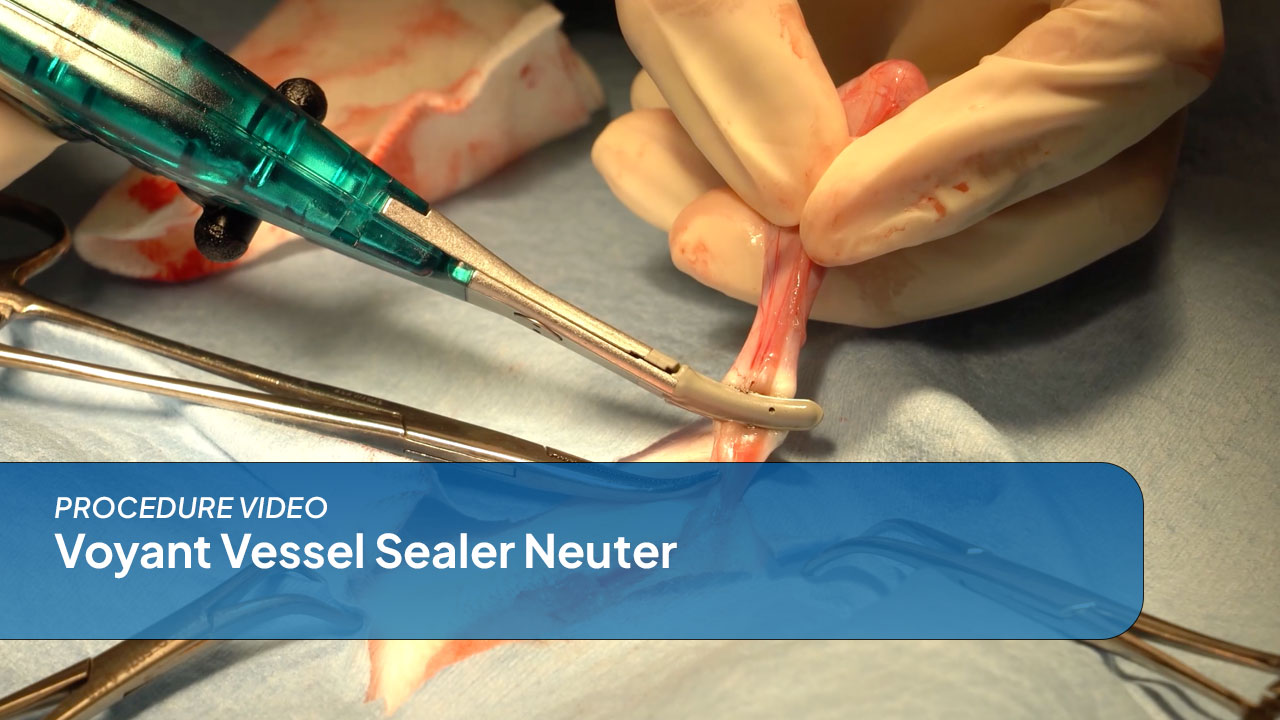
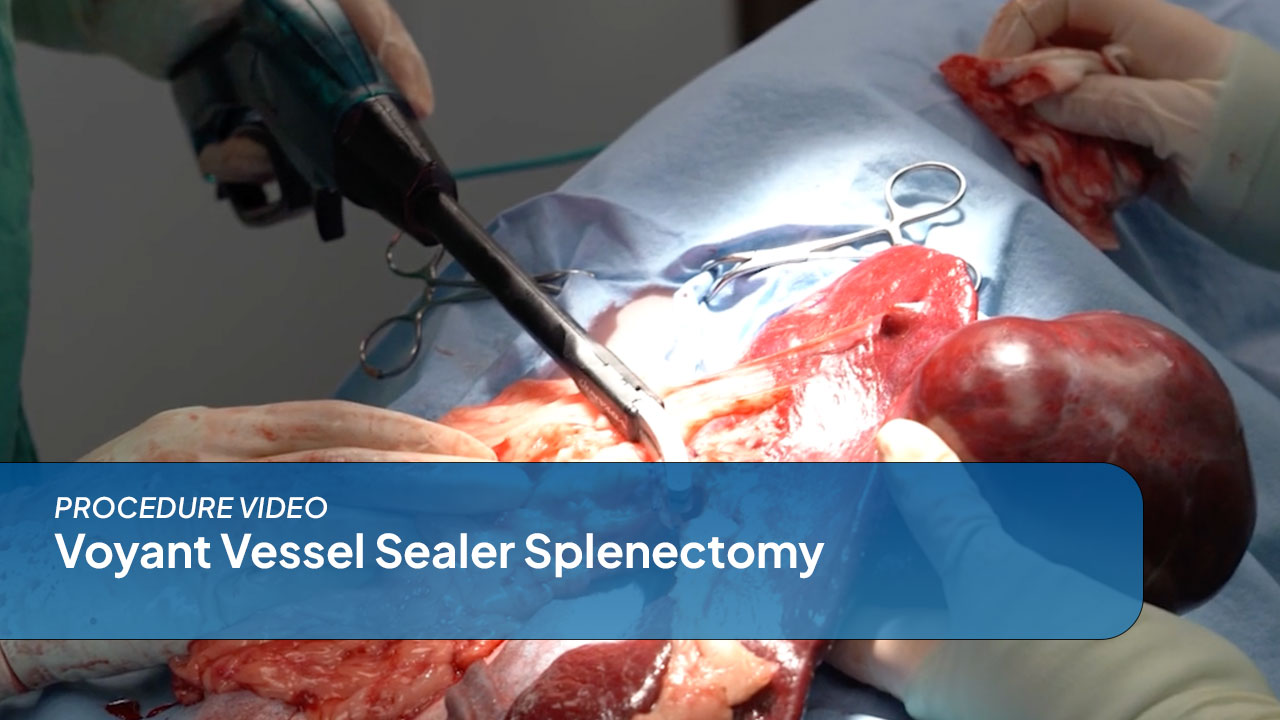
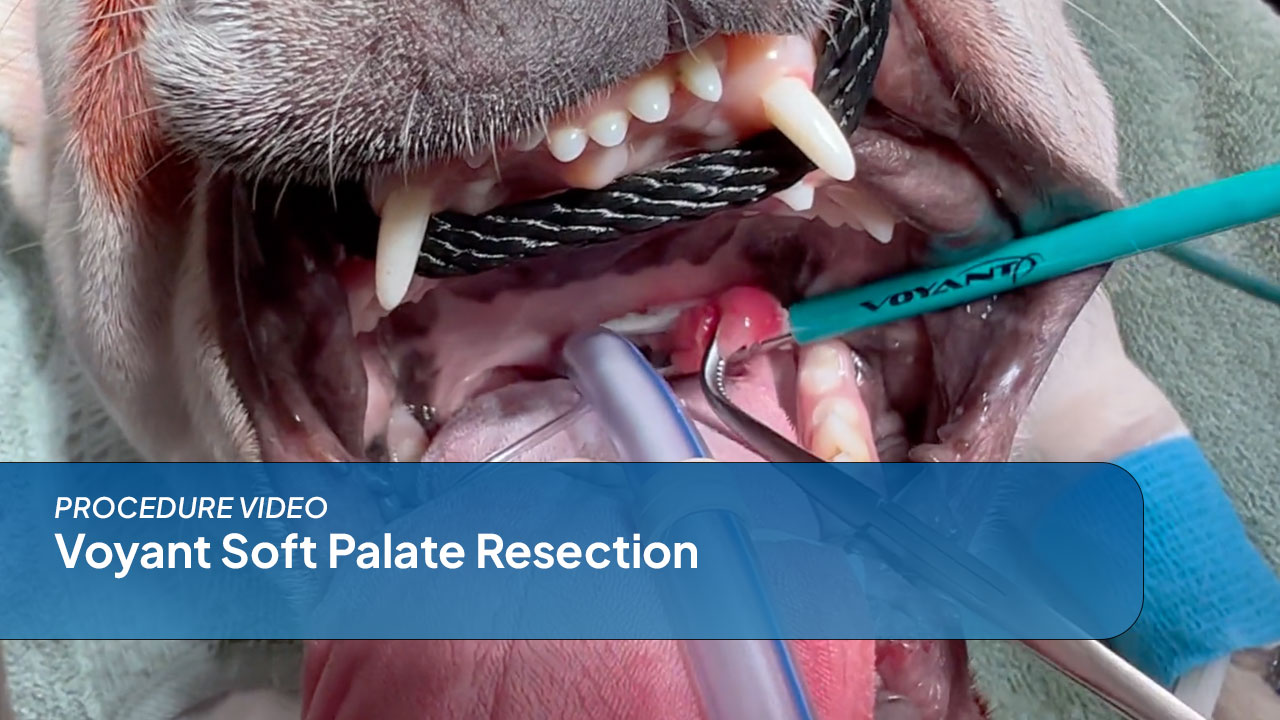
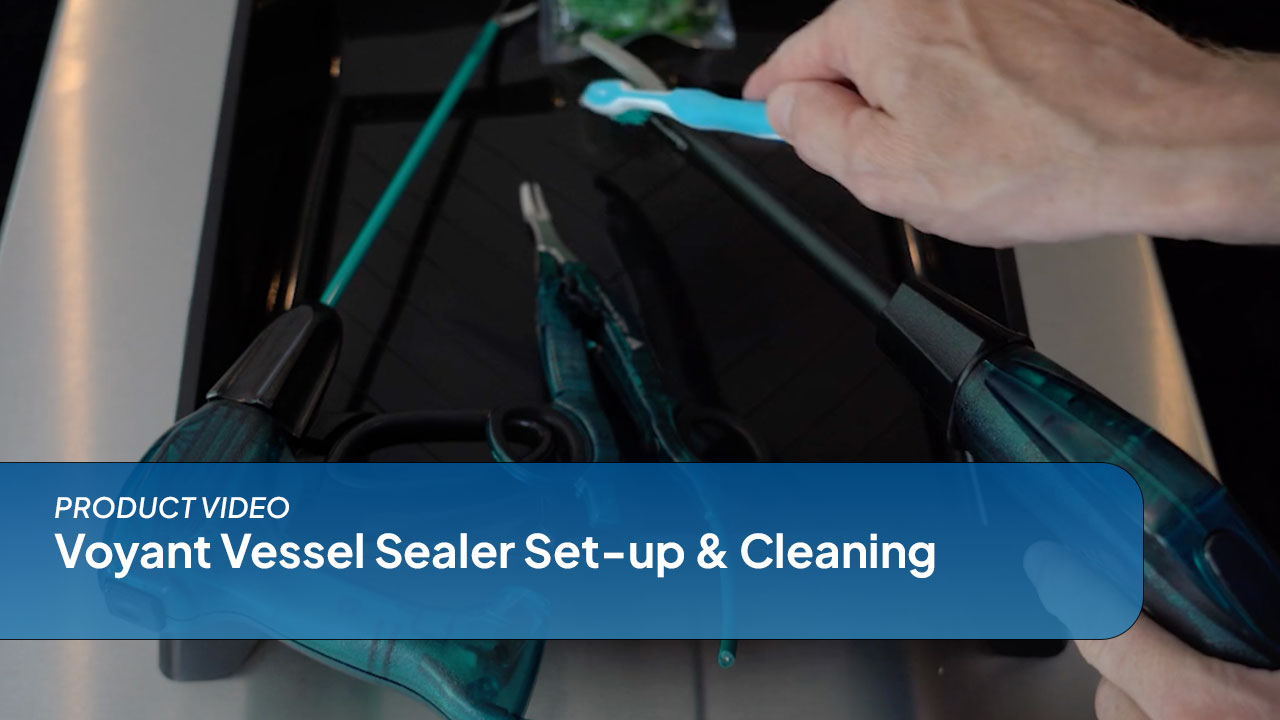
Comparing the Two Systems for Minimally Invasive Surgery
For laparoscopic MIS, the two systems differ mainly in jaw design:
Caiman 5mm — 26.5mm sealing length, the longest jaw among 5mm RF devices. Its hinged jaw closes tip-first, which helps prevent tissue slippage during laparoscopic manipulation.
Voyant 5mm Fusion — 20mm seal length and paired with the Voyant Intelligent Energy system,
which measures tissue in real time and adjusts energy delivery throughout the seal cycle to help create a consistent fused seal.
Vessel Sealing vs. Traditional Suture Ligation
| Factor | Vessel Sealing | Traditional Ligation |
|---|---|---|
| Hemostasis method | Bipolar energy + compression | Suture ligature |
| Tissue division | Many instruments combine sealing and cutting | Usually separate steps |
| Instrument exchanges | Can reduce exchanges | May require multiple instruments |
| Sutures | Can reduce reliance on ligatures | Requires suture material |
| Open procedures | Yes | Yes |
| Laparoscopic procedures | Specialized instruments available | More technically demanding |
Veterinary Applications
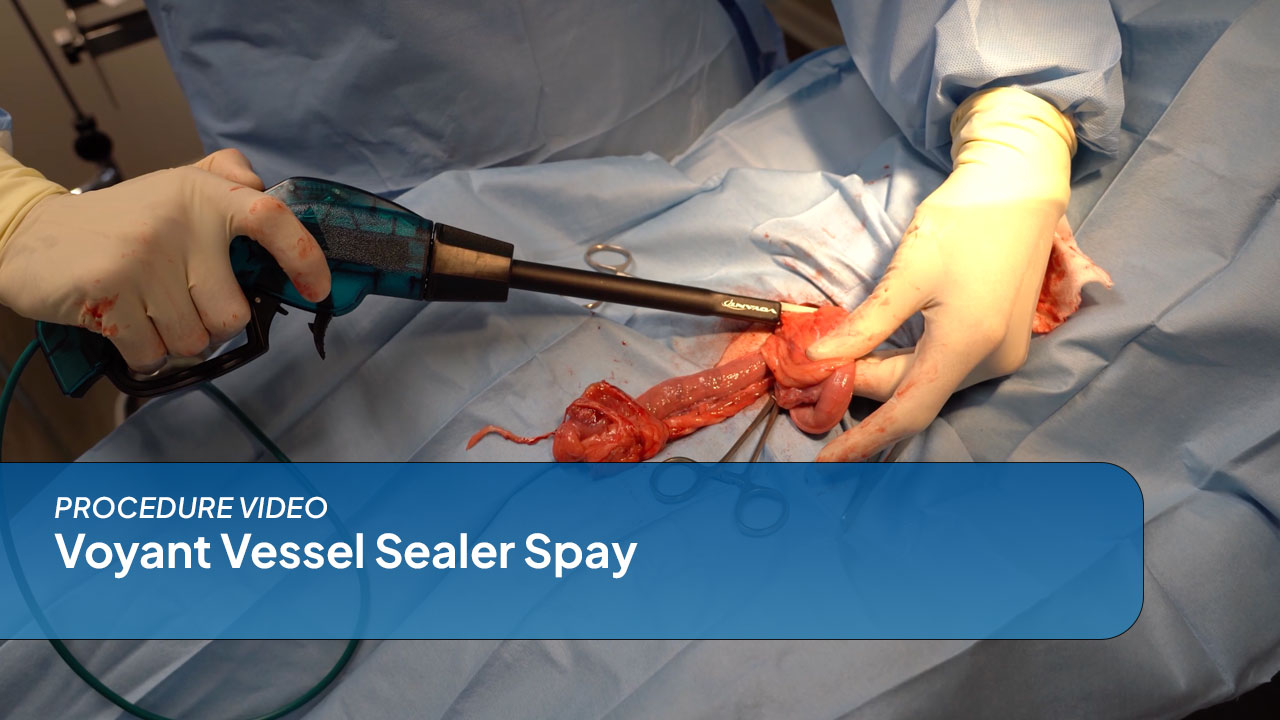
This mechanism applies across a range of procedures.- Spay/neuter — The sealer replaces suture ligation of the ovarian and uterine vessels.
- Splenectomy — It seals the splenic vessels, which are more numerous and variable in size than in a routine spay, making the consistent-seal aspect of the technology more clinically relevant. It also allows a faster dissection time through the splenic tissue.
- General soft-tissue surgery (mass removals, limb amputations) — The same seal-and-cut mechanism reduces the number of instrument exchanges needed across a longer procedure in addition to allowing tissue, fat and vascular structures to all be resected at the same time in a safe and effective manner. The reduction in procedure time is enormous.
Equipment Considerations
The instrument and generator are matched pairs, and not interchangeable across brands. A Voyant Fusion instrument runs on the Voyant Electrosurgical Generator; a Caiman instrument runs on the Caiman Vessel Sealing Generator. Jaw length and shaft length also vary by instrument and procedure type, from open instruments down to 5mm laparoscopic instruments, so the right pairing depends on whether the practice is doing open surgery, laparoscopic surgery, or both.Comparison: 5mm Laparoscopic Vessel Sealing Instruments
| Feature | Caiman 5mm (Aesculap) | Voyant Maryland Fusion (Applied Medical) |
|---|---|---|
| Seal length | 26.5mm | 20mm |
| Cut length | 23.5mm | 18mm |
| Jaw design | Hinged, tip-first closure | Straight, blunt jaw |
| Max vessel diameter | 7mm | 7mm |
| Available lengths | 24, 36, 44 cm | 23, 37 and 44cm |
| Sterlink compatibility | 24cm fits; 36cm and 44cm do not | 23cm fits; 37cm and 44cm do not |
Frequently Asked Questions
These FAQs answer the most common questions veterinarians ask about vessel sealing technology, including how vessel sealers work, what procedures they support, and the benefits of advanced energy devices in veterinary surgery. The information below is designed to help practices understand how vessel sealing can improve surgical efficiency, reduce blood loss, and support minimally invasive procedures.
What is a veterinary vessel sealer?
A veterinary vessel sealer is an advanced surgical device that uses bipolar energy to seal blood vessels and tissue during surgery. The technology creates a permanent tissue seal while minimizing bleeding and reducing the need for traditional ligatures. Vessel sealing systems are commonly used in both open and minimally invasive veterinary procedures.
How does a vessel sealing system work?
A vessel sealing system applies controlled energy and pressure to tissue, creating a reliable seal by permanently fusing collagen and elastin within the vessel wall. Many systems also include an integrated cutting mechanism that allows surgeons to seal and divide tissue in a single step. This can improve efficiency and reduce instrument exchanges during surgery.
What procedures can be performed using a veterinary vessel sealer?
Veterinary vessel sealers are commonly used for spays, neuters, splenectomies, pyometra surgery, mammary mass removal, limb amputations, laparoscopic procedures, and soft palate resections. The technology helps surgeons achieve hemostasis quickly while reducing tissue trauma and surgical time.
What are the benefits of vessel sealing compared to traditional ligation?
Vessel sealing can reduce blood loss, shorten procedure times, and minimize tissue handling compared to traditional suture ligation techniques. Fewer instrument exchanges and improved visualization may also contribute to a more efficient surgical workflow. These advantages can support faster recovery and improved patient outcomes.
Can vessel sealers be used in laproscopic surgery?
Yes! Many veterinary vessel sealing systems are designed for both open and laparoscopic procedures. Specialized laparoscopic instruments allow surgeons to seal and transect vessels through small incisions while maintaining the benefits of minimally invasive surgery.
What size vessels can a veterinary vessel sealer seal?
Many advanced veterinary vessel sealing systems are designed to coagulate and transect vessels up to 7 mm in diameter. This capability makes them suitable for a wide range of routine and advanced soft tissue surgical procedures.
Why are vessel sealing devices becoming more common in veterinary surgery?
Veterinary practices increasingly use vessel sealing technology because it improves surgical efficiency while supporting safer tissue handling and reliable hemostasis. The ability to seal and divide tissue quickly makes vessel sealers valuable tools for both routine and advanced surgical procedures.
What is the best vessel sealer for laparoscopic spay in dogs?
For laparoscopic spay, VetOvation offers the Caiman 5 mm Vessel Sealing Laparoscopic Instrument by Aesculap, which is designed specifically for minimally invasive procedures and runs on the Caiman Vessel Sealing Generator. Voyant Fusion Instruments by Applied Medical are also available for vessel sealing. Both systems reduce blood loss, tissue trauma, and anesthesia time compared with suture ligation.
What vessel sealer is used for open spay (OHE) in veterinary surgery?
The Voyant Open Fusion Instrument by Applied Medical is designed for open surgical approaches such as open ovariohysterectomy and operates with the Voyant Electrosurgical Generator. It delivers the same hemostasis benefits of reduced blood loss and shorter anesthesia time.
How much does a veterinary vessel sealing system cost?
Pricing depends on the configuration. The Voyant Vessel Sealer Starter Kit by Applied Medical is $12,500 for a new unit or $10,500 for a serviced unit. Generators are available separately (Voyant Electrosurgical Generator $11,750; Caiman Vessel Sealing Generator $11,500), and individual Voyant Fusion instruments are $725 each. The Caiman 5 mm Laparoscopic Instrument starts at $750, and the Caiman 12 mm instrument is $1,550.