

Electrosurgery
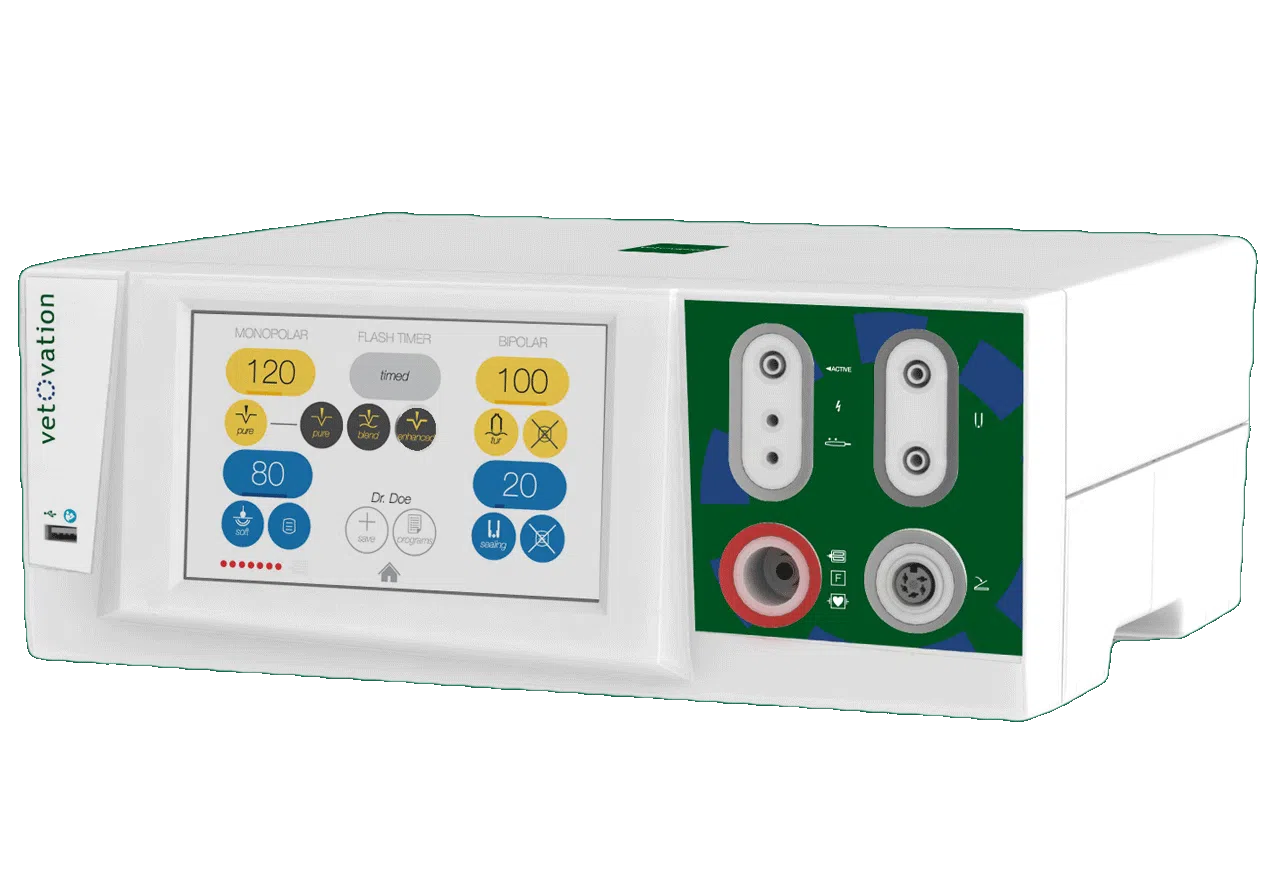

Veterinary surgical teams rely on electrosurgery for precise cutting, coagulation, and tissue dissection across nearly every soft tissue procedure from routine spay and neuter to more complex oncologic and specialty surgeries.
Unlike general-purpose electrosurgical equipment adapted from human medicine, VetOvation’s systems are built specifically for veterinary anatomy, caseloads, and OR workflows, so practices aren’t compromising on precision or safety to make equipment fit.
Our electrosurgery lineup spans generators, reusable cautery pencils, bipolar accessories, and replacement electrodes, giving practices the flexibility to build out a system that matches their surgical volume rather than adopting a one-size-fits-all setup.
Every generator in our catalog is designed to pair directly with VetOvation’s smoke evacuation technology, making it easier and less disruptive to incorporate it into your workflows to protect your patients and staff.
Shop Electrosurgery Products
Other Categories
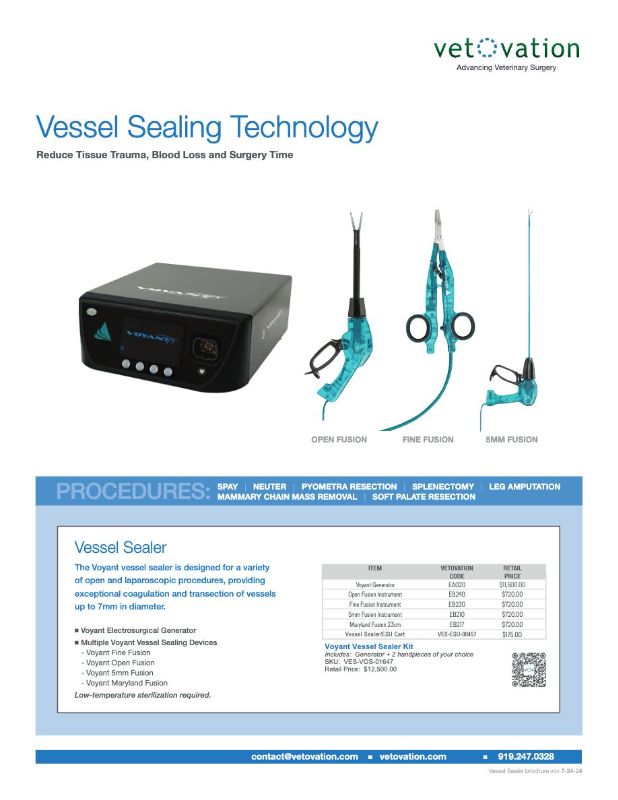
Product Brochures
User Manuals


Choosing a Veterinary Electrosurgery Unit: What to Consider
Not every practice needs the same generator. A high-volume spay/neuter clinic and a specialty soft tissue hospital have very different requirements. Here’s what to weigh before you buy.
Should I get a monopolar or bipolar electrosurgery unit?
Most practices need both modes available, not just one. Monopolar energy, delivered through a reusable cautery pencil, works well for general cutting and coagulation across a wide range of soft tissue procedures. Bipolar energy, delivered through bipolar forceps or a vessel sealing clamp, gives more localized control for delicate work near sensitive structures. A generator that supports both modes, rather than a single-mode unit, gives your surgical team flexibility without adding a second system to your OR.
How much power output do I need?
Power needs come down to your case mix: a high-volume spay/neuter practice requires less wattage than a hospital handling complex soft tissue or oncologic surgery.
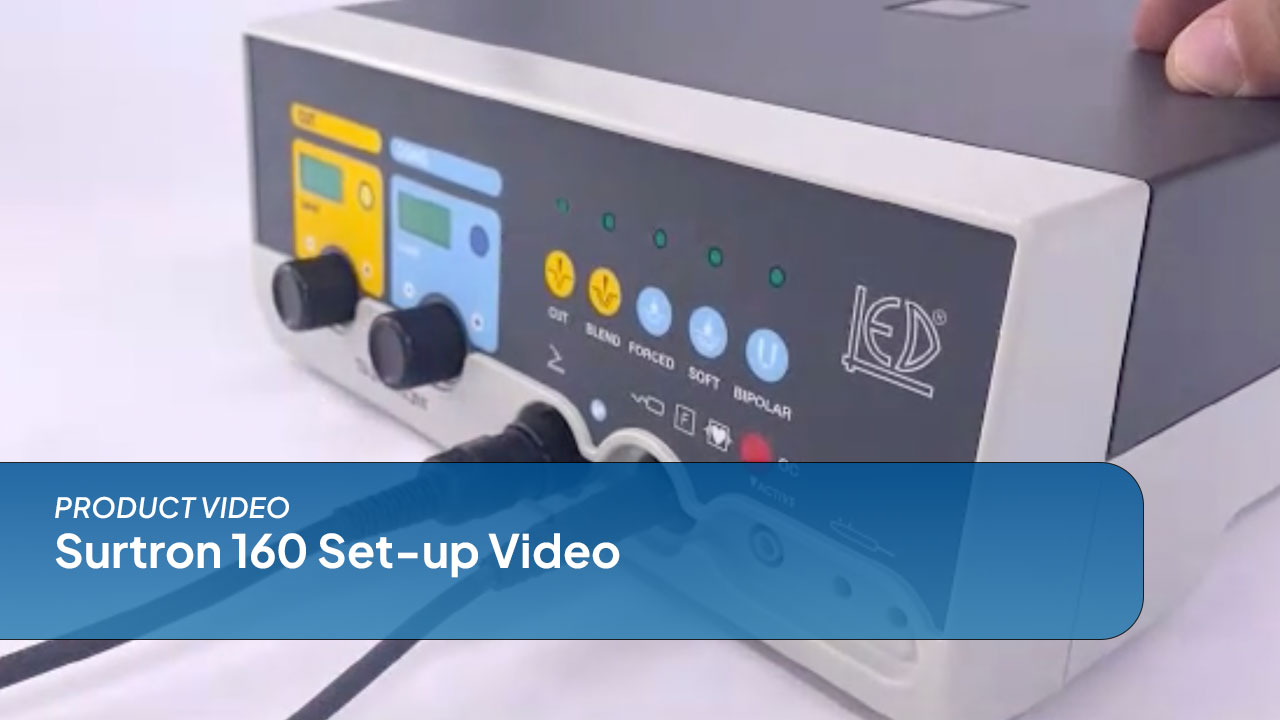
- The Surtron 160 delivers up to 160W in CUT mode and includes a bipolar adapter, making it well suited to routine procedures and general practice caseloads.
- The Surtron 200 steps up to 200W in CUT mode with native monopolar and bipolar capability plus microsurgery and vessel sealing support, handling a broader range of tissue types and longer procedures.
Matching wattage to your actual caseload avoids paying for capability you won’t use or outgrowing a unit within a year.
Compatibility with Your Existing Setup
An electrosurgery unit rarely works in isolation. Check whether the generator integrates with your current smoke evacuation system, footswitch controls, and any vessel sealing equipment already in your operating room.
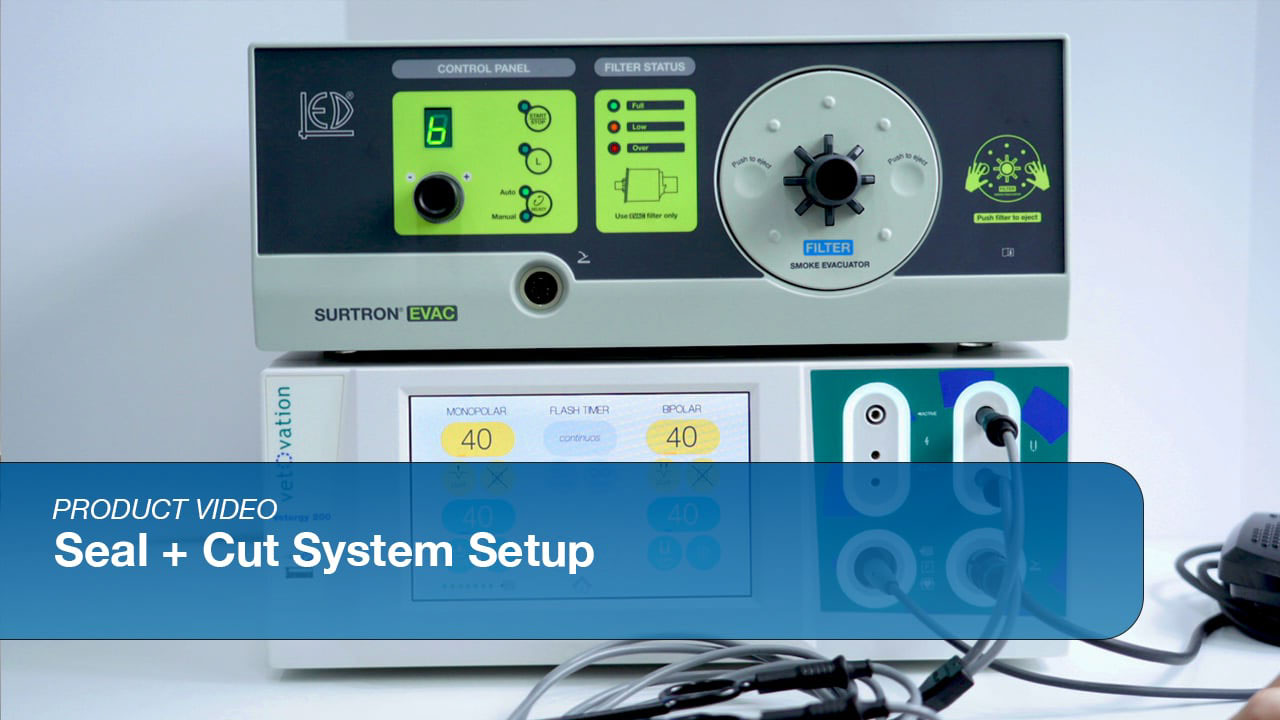
The VetOvation Seal + Cut is built around this idea. It is a 4-in-1 system combining a 200W generator, bipolar and monopolar cautery, vessel sealing, and a smoke evacuator in a single platform, so your staff can train on and maintain one system instead of several. It also comes complete with a large array of disposable and reusable products to make sure your team is prepared for anything, including a large number of cases, right up front.
Why does smoke evacuation matter?
Surgical smoke is a real occupational exposure risk for patients and veterinary staff, not just a visibility issue, so your generator should communicate automatically with a smoke evacuation unit rather than requiring manual coordination between two separate devices.
The VetOvation Smoke Evacuator by Surtron activates automatically alongside compatible Surtron generators, and its filtration removes particles down to 0.12 microns. That keeps the surgical field clear and reduces staff and patient exposure without adding steps to the procedure.
Durability and Long-Term Cost
Electrosurgical instruments go through repeated sterilization cycles, and not all handpieces hold up the same way over time. Reusable, autoclavable instruments, such as the pencils and bipolar clamps included with the Surtron and Seal + Cut systems, typically cost less per use over time than fully disposable options. Ask about expected instrument lifespan and generator warranty terms before comparing sticker price alone.
Specifications Worth Comparing Side by Side
Before deciding, compare units on the same criteria: wattage range, available energy modes, smoke evacuation compatibility, and included accessories. The Surtron 200 and Seal + Cut generators also add a 7-inch touch screen with pre-programmed surgery protocols, letting staff select a saved protocol suited to the procedure instead of manually dialing in power settings each time. That’s a meaningful time-saver in a larger practice, since several surgeons can rely on the same generator producing consistent settings across different procedure types. The Surtron 160 uses manual dial controls and doesn’t include this feature.
| Model | Max Power Output | Energy Modes | Smoke Evacuation | Included Accessories | Best For |
|---|---|---|---|---|---|
| Surtron 160 | 160W (CUT) | Monopolar, Bipolar with adapter | Compatible with Surtron Smoke Evacuator | Monopolar pencil, grounding electrode and cable, bipolar adapter, 10 electrode tips, 4 disposable pencils, cleaning pad | Routine spay/neuter procedures and general practice caseloads |
| Surtron 200 | 200W (CUT) | Monopolar, Bipolar, Microsurgery | Compatible with Surtron Smoke Evacuator | Reusable monopolar pencil and cord, optional foot pedal, grounding electrode and cable, 10 electrode tips, 4 disposable pencils, cleaning pad | Higher caseloads, broader tissue types, longer procedures, and practices needing saved procedure protocols |
| Seal + Cut with Smoke Evacuation | 200W (CUT), 200W Vessel Sealing | Monopolar, Bipolar, Vessel Sealing | Built-in smoke evacuator | 4-in-1 kit with generator, smoke evacuator, 2 bipolar vessel-sealing clamps and cables, bipolar and bipolar jeweler forceps, 2 monopolar pencils and cables, 8 disposable pencils, foot pedal, grounding plate, smoke evacuation tubing set, replacement filters | Practices wanting a 200-watt generator and integrated smoke evacuation and vessel sealing in one platform |
Frequently Asked Questions
These FAQs answer the most common questions veterinarians ask about veterinary electrosurgery units, including how electrosurgical generators work, what procedures they support, and how they improve surgical efficiency. The information below is designed to help practices understand the benefits of monopolar and bipolar electrosurgery, smoke evacuation, and advanced energy technology in veterinary surgery.
What is a veterinary electrosurgery unit?
A veterinary electrosurgery unit (ESU) is a surgical device that uses high-frequency electrical energy to cut tissue and control bleeding during procedures. Electrosurgical generators are commonly used in soft tissue surgery because they allow veterinarians to perform precise cutting and coagulation while improving hemostasis.
How does an electrosurgical generator work?
An electrosurgical generator delivers radio-frequency energy through specialized instruments to cut, coagulate, or desiccate tissue. The energy creates controlled thermal effects that help surgeons perform procedures efficiently while reducing bleeding and improving visualization of the surgical field.
What procedures can be performed using veterinary electrosurgery?
Veterinary electrosurgery is commonly used for spays, neuters, mass removals, soft tissue surgery, oral surgery, wound management, and many general surgical procedures. The ability to cut and coagulate simultaneously can help reduce procedure times and improve surgical efficiency.
What is the difference between monopolar and bipolar electrosurgery?
Monopolar electrosurgery delivers energy from the active electrode through the patient to a grounding electrode, making it suitable for a wide range of surgical applications. Bipolar electrosurgery passes energy between two tips of a forceps-style instrument, providing more localized tissue effects and precise coagulation in delicate procedures.
Why is smoke evacuation important during electrosurgery?
Smoke evacuation systems remove surgical smoke generated during electrosurgical procedures. This improves visibility in the surgical field and helps reduce exposure to airborne particles for veterinary staff and patients. Many modern veterinary electrosurgery systems integrate directly with smoke evacuation equipment for improved workflow and safety.
What equipment is included in a veterinary electrosurgery system?
A veterinary electrosurgery system typically includes an electrosurgical generator, monopolar and bipolar instruments, grounding components, foot pedal controls, and compatible accessories. Some advanced systems also incorporate smoke evacuation and vessel sealing capabilities within a single platform. More details about this system are available here.
Can electrosurgery be used in minimally invasive procedures?
Yes! Electrosurgical technology is commonly incorporated into laparoscopic and other minimally invasive surgical procedures. Advanced energy devices allow surgeons to cut and coagulate tissue through small access ports while maintaining excellent procedural control.
How should electrosurgical instruments be cleaned and maintained?
Electrosurgical instruments should be cleaned, inspected, and sterilized according to manufacturer recommendations after each procedure. Proper maintenance helps preserve instrument performance, extend equipment lifespan, and support safe surgical operation.